


Products

External Concrete Vibrator
A concrete vibrator is used to ensure that the concrete becomes compact while putting concrete i.e. the concrete is placed without the inclusion of air bubbles which can affect its strength and it is necessary in most cases because the fluidity of concrete is limited by the amount of water used in the mixture.
Features
Taizhou Julante Electromechanical Technology Co.,Ltd. (Wenling Shengzhen Motor Plant which was founded in August, 1993) has constantly developed over years. Shanghai Cheng bang Electromechanical Co., Ltd. was founded after the registration in Shanghai in April 2004. Taizhou Aoxiang Electromechanical Co., Ltd. was founded after the registration in Taizhou in December 2005. Taizhou Julante Electromechanical Technology Co., Ltd. was founded in June 2011. At present, the company has 4 registered trademarks including Aoxiang, Chengbang, Shenzhe and Julante.In 2011, the company invested RMB20 million in building a standard three-storey plant which comes into service currently, with a building area of 10,000 square meters.
Why Choose US
Our Factory
Taizhou Julante Electromechanical Technology Co., Ltd. Which is located in Wenling,Taizhou City,Zhejiang Province,China , has constanly developed over 21years.At present,The company has 4 registered trademarks including Aoxiang, Wubang, Shenzhe and Julan.
Main Market
Thanks to its top quality and perfect after-sales service, the company has won trust of customers. Meanwhile, its products win favor of overseas customers. At present, its products are exported to more than 20 countries and areas such as the United States, Korea, Russia, Southeast Asia, Africa and Europe.
Our Product
Main Products Include high- and low-power Electric Motors such as "YY", "YC" and "YL" series Single Phase Motors and "YX3", "Y3" "Y2" "YD" "YT" &"MS "Three Phase Motors; Concrete Vibrators such as ZN series internal concrete vibrator,ZW series external concrete vibrators.Meanwhile, it can also produce welding machines, water pumps, air compressors, grinders, bench drills, cutting machines, axial flow fans, etc.
Professional team
The company has 50 managers at different posts, 30 R & D technicians, and 270 production employees. It realizes an annual productivity of 500,000 motors and 300,000 electric welding machines. Its sales network spreads all over provinces, municipalities and autonomous regions. Thanks to its top quality and perfect after-sales service, the company has won trust of customers.

Concrete Vibrator Electric Vibrator Motor
Concrete vibrator is used to consolidate cement and remove all the trapped air bubbles to give you the toughest cement possible,widely used in a variety of building purposes and concrete foundation work such as road,bridge and tunnel.it is an indispensable tool in concrete spot in distant area without electricity or when there is black out.
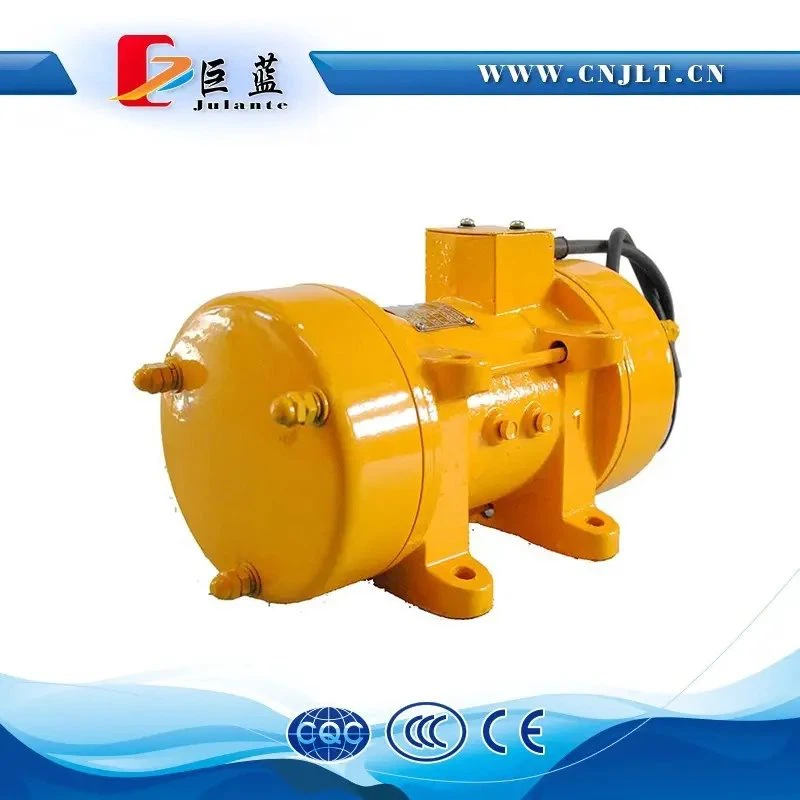
Concrete vibrator is used to consolidate cement and remove all the trapped air bubbles to give you the toughest cement possible, widely used in construction, transportation, water conservancy, port, mine and metallurgy, etc. It can be adapted to every type of application, vibrator heads and shafts can be easily combined and rapidly exchanged to match the right equipment to the job.

Electrical Portable Concrete Vibration Motor
ZW plate vibrato surface type concrete vibrator is an essential tool for concrete vibrator, which is widely used in modern construction engineering dense concrete vibrators work. 2.It can be used for the concrete foundation level and various parts of the surface of the concrete structure of the work of the tap. 3.Also be installed in a variety of vibration shaker and other equipment and used as a source of vibration.

ZW-1 0.25KW plate vibrator 1/3hp 220v external concrete vibrator concrete vibrator is used to consolidate cement and remove all the trapped air bubbles to give you the toughest cement possible, widely used in construction, transportation, water conservancy, port, mine and metallurgy, etc. It can be adapted to every type of application, vibrator heads and shafts can be easily combined and rapidly exchanged to match the right equipment to the job.

Electric Plate Concrete Vibrator
Concrete vibrator is used to consolidate cement and remove all the trapped air bubbles to give you the toughest cement possible, widely used in construction, transportation, water conservancy, port, mine and metallurgy, etc. It can be adapted to every type of application, vibrator heads and shafts can be easily combined and rapidly exchanged to match the right equipment to the job.
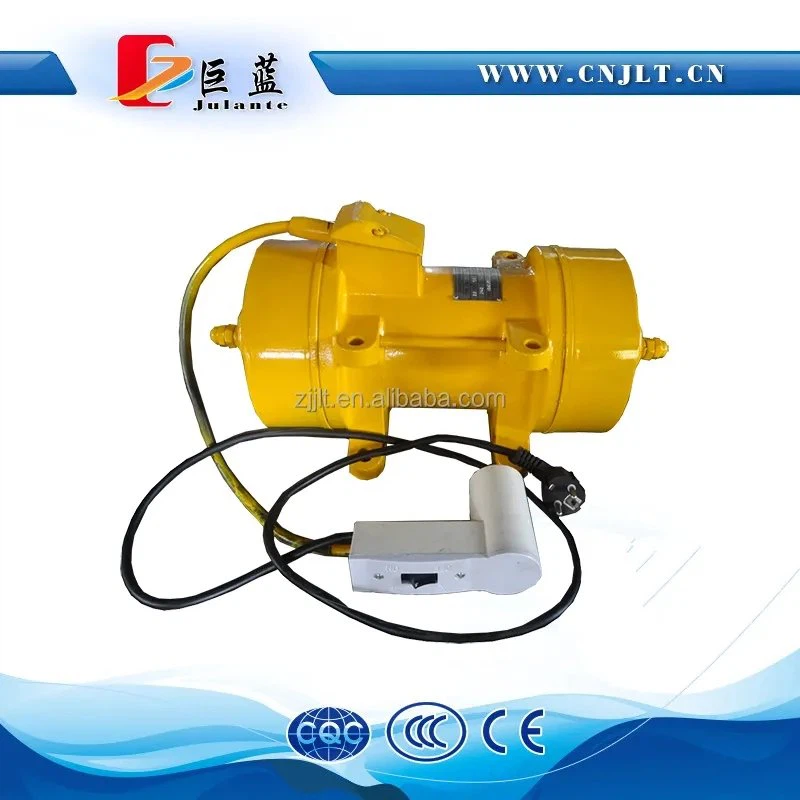
Single Phase Concrete Table Vibrator
ZW plate vibrato surface type concrete vibrator is an essential tool for concrete vibrator, which is widely used in modern construction engineering dense concrete vibrators work. 2.It can be used for the concrete foundation level and various parts of the surface of the concrete structure of the work of the tap. 3.Also be installed in a variety of vibration shaker and other equipment and used as a source of vibration.

Single Phase Concrete Electric Vibrator
Video outgoing-inspection:Provided
Machinery Test Report:Provided
Marketing Type:Hot Product 2019
Warranty of core components:1 Year

Marketing Type:Hot Product 2019
Warranty of core components:1 Year
Core Components:Motor
Condition:New

Video outgoing-inspection:Provided
Machinery Test Report:Provided
Marketing Type:New Product 2020
What is External Concrete Vibrator
A concrete vibrator is used to ensure that the concrete becomes compact while putting concrete i.e. the concrete is placed without the inclusion of air bubbles which can affect its strength and it is necessary in most cases because the fluidity of concrete is limited by the amount of water used in the mixture.
Advantages of External Concrete Vibrator
Improved concrete density and strength
One of the primary benefits of using a high-quality concrete vibrator is the ability to achieve a denser and stronger concrete mixture. By effectively consolidating the concrete and eliminating air pockets, the vibrator ensures that the concrete attains its maximum potential strength and durability.
Elimination of air pockets and voids
Air pockets and voids in concrete can lead to structural weaknesses, cracking, and other defects. A high-quality concrete vibrator effectively removes these air pockets, resulting in a more homogeneous and robust concrete structure.
Enhanced workability and placement
Vibration not only helps to consolidate the concrete but also improves its workability, making it easier to place and finish. This benefit is particularly valuable when working with stiff or low-slump concrete mixes, as vibration can improve the flow and workability of the material.
Increased durability and longevity
By ensuring proper consolidation and eliminating air pockets, a high-quality concrete vibrator contributes to the overall durability and longevity of the concrete structure. Properly consolidated concrete is less susceptible to cracking, spalling, and other forms of deterioration, resulting in a longer-lasting and more resilient structure.
Time and labor savings
Effective concrete vibration can significantly reduce the time and labor required for consolidation, particularly in applications where manual compaction methods would be inefficient or impractical. This benefit translates into cost savings and increased productivity on the job site.
Versatility in applications
High-quality concrete vibrators are available in various sizes and configurations, making them suitable for a wide range of applications, from small residential projects to large-scale commercial and infrastructure construction. Whether working with precast concrete elements or cast-in-place structures, a suitable vibrator can be found to meet your consolidation needs.
A concrete vibrator is composed of three parts: the main motor, the whip, and the head. The motor connects to the whip on one side and on the other end, the head. The motor is a crucial part of driving the vibrator. Motors can be electric or gas powered. The function of the motor is to spin the internal core of the whip to vibrate at a high frequency, typically above 8000 rotations per minute.
The whip is another crucial part as it extends the vibration to the desired length of what is needed for the job. Whips have rubber casings which are intended for high vibration and heat; they can vary between 3 to 20ft. Whips that are not built for high vibration and heat will most certainly break, which could damage the motor.
The last part is the head, this part can vary in diameter and may be anywhere from 1''-3'' in diameter. Some vibrator heads are rubber to prevent chipping rebar when vibrating. Another unique head would be the high frequency concrete vibrators which have motors built inside the head. These high frequency vibrators require little to no maintenance and the main advantage is there is no vibration loss. This could be important when you have to vibrate a column over 20ft in length, in this scenario a standard vibrator would lose most of its vibrations after 16ft; where a high frequency vibrator would maintain stable vibration. However, these are the most expensive of the many types of concrete vibrators.
Electric concrete vibrators are the more popular type of concrete vibrators due to their high RPM that is needed to thoroughly remove air pockets quickly. Electric vibrators are smaller, but can use longer whips as opposed to gas vibrators that can work with an effective maximum length of 10ft. Electric concrete vibrators can use whips at an effective maximum length of 20ft.
Popular whips used are 10ft whips and 16ft whips. The purpose of these lengths can be used for rebar columns that requires the longer whips to eliminate any air pockets that can be hard to reach with other concrete vibrators. Popular shaft options are 1 to 1.5 inch diameter, as the common rebar diameter 2 to 4 inches. Both the whip and the shaft are replaceable and interchangeable, so different length whips can work with different diameter shafts.
With the wide variety of concrete vibrators to use on your job site, it is important to consider the needs of your concrete job. Choosing the right concrete vibrator to efficiently and effectively eliminate air pockets is incredibly important to remove air pocket to avoid any concrete structural failures.
Different aspects may be taken into account for choosing the most adequate concrete vibrator for a project, as well as the following steps to follow for obtaining the best possible results on concrete.
Correct use of the concrete vibration equipment:
The initial head introduction onto the concrete must be made quickly and vertically. If the introduction is performed slowly, the desired depth is not reached and vibration takes place on the unwanted place. The layers on top become compacted and the air on the inferior ones remains trapped on them. We recommend to perform brief introductions (5-15") with short incisions rather than long prolonged ones.
Radius and action area:
Creating a suture effect between layers can guarantee a more homogeneous mass, lowering the possibility of finding structural failures.
pay attention to internal movements
It is recommended to access with the vibrator to corners and other difficult-access places, taking care of not touching the formwork.
importance of the re-vibration process
Performing a second vibration process or `revibration´ improves the aesthetic appeal, avoids the apparition of crates and increments the resistance of the structure itself.
petrol or electric equipment
Offers a wide range of concrete vibration products that go from petrol to electric functioning adapting the necessities of the each user.
Vibration frequency and amplitude
The vibration frequency and amplitude of a concrete vibrator play a crucial role in its effectiveness. Higher frequencies are generally better suited for consolidating stiff or low-slump concrete mixes, while lower frequencies are more effective for fluid mixes. The amplitude (the distance the vibrator head moves) also affects the consolidation radius and depth.
Power source and portability
Concrete vibrators can be powered by various sources, including electric motors, gasoline engines, or pneumatic systems. Consider the power source that best suits your job site conditions and portability requirements. Electric vibrators are generally more compact and suitable for indoor or confined spaces, while gasoline-powered vibrators offer greater mobility for outdoor applications.

Ease of operation and maintenance
Look for a concrete vibrator that is user-friendly and easy to operate, with ergonomic features like adjustable handles and balanced weight distribution. Additionally, consider the ease of maintenance and availability of replacement parts, as proper maintenance is crucial for ensuring the vibrator's longevity and performance.
Safety features
Follow the manufacturer's instructions carefully when operating a concrete vibrator. Proper operating techniques, such as inserting the vibrator head vertically and allowing it to penetrate the concrete under its own weight, are essential for effective consolidation and preventing damage to the vibrator or surrounding formwork.
Personal protective equipment (ppe)
When working with concrete vibrators, it's crucial to wear appropriate personal protective equipment (ppe) to ensure your safety. This includes:
Protective eyewear to shield your eyes from flying debris
Hearing protection, such as earplugs or earmuffs, to reduce exposure to noise
Non-slip safety footwear to prevent slips and falls
Gloves to protect your hands from vibrations and abrasions
Respiratory protection, like a dust mask, to avoid inhaling concrete dust
What Safety Precautions Should Be Taken When Using Concrete Vibrators
Before starting any task with a concrete vibrator, conduct a thorough inspection of the tool. Ensure that all parts are in good condition and that there are no damaged cables or connections. If any abnormalities are detected during use, stop the machine immediately.
The use of Personal Protective Equipment (PPE) is essential when working with concrete vibrators:
Helmet: Mandatory when there is a risk of falling objects or head impacts.
Safety footwear: Must have puncture-resistant and slip-resistant soles.
Gloves: To prevent contact with concrete slurry and reduce vibration transmission.
Safety goggles: Necessary when vibrating in areas close to the face, as there is a risk of particle projection and splashes of concrete slurry.
Hearing protection: Mandatory when the operator´s noise level exceeds 87 dB(A).
Do not use the vibrator continuously for extended periods. Establish rest times.
Engine/motor troubleshooting
The first type of problem you may encounter involves the engine or motor not starting. In this case, you may want to check a few factors:
Fuel/power: This is a basic but crucial first step. For vibrators that run on gasoline, ensure that the tank has an ample supply of fuel that is fresh and free of contamination. When it comes to electric or battery-operated concrete vibrators, we must verify that machine is accurately linked to the power supply, or ensure that the battery possesses full charge.
Spark plugs and ignition system: The state of spark plugs and ignition system can often be the root of problems. It is imperative to ensure that spark plug is free from filth, is gapped accurately, and shows no signs of wear and tear. If spark plugs are in a favorable condition while problem endures, it may be necessary to examine entire ignition system.
Starter or battery problem: If you check the fuel and spark plugs but the motor won't start, consider the possibility that there's a problem with the starter or battery (for electric vibrators). Check the connections, charge levels and general condition of these components.
Overheating or oil level issues: Sometimes the engine or motor will refuse to start due to overheating or improper oil level. Before attempting to start, make sure the engine is cool and carefully check the oil level, topping up if necessary.
The engine/motor runs but does not vibrate
Once the engine or motor is running, there may be situations where the necessary vibration cannot be generated:
Clutch or belt engagement issues: Clutches and belts play an important role in transmitting power from the motor to the vibrating head. Check these mechanisms for signs of wear, separation or slipping.
Shaft or head coupling issues: Make sure the flexible shaft is properly connected to the power unit and vibrator head. Any slippage or disconnection will prevent vibration from being effectively transferred from the motor to the application area.
Excessive engine vibration: If the engine or motor itself is vibrating excessively, it may indicate an internal problem. These can include imbalances in rotating parts, damaged bearings, or even cylinder wear. In this case, professional inspection and repair may be the best solution.
Concrete vibrator vibrating head troubleshooting
Even if your engine is running smoothly, you may still face challenges from the vibrating head of your concrete vibrator. These problems can usually manifest themselves in two ways: Weak vibration or excessive vibration. Let's delve deeper into these issues and suggest some troubleshooting steps for each issue.
Weak vibration
Weak or suboptimal vibration from a concrete vibrator can slow down your project and affect the quality of concrete consolidation. Here are some potential causes and their solutions:
Worn head bearings or seals: As with any component that experiences significant wear, the bearings and seals in the vibrating head can become worn, causing weak vibrations. Check bearings and seals for signs of wear. If necessary, replace these parts to restore full functionality of the vibrator.
Shaft bending or impeller damage: Since these are key components that generate vibration, shaft bending or impeller damage will directly lead to a significant decrease in vibrator efficiency. Check these parts carefully and replace if deformed or damaged.
Clogged heads or hoses: Sometimes, clogged heads or hoses can reduce vibration intensity. Regular inspection and cleaning of the head and hose will help maintain optimal performance.
Excessive vibration
Conversely, vibrators that produce excessive vibration can also cause problems, including accelerated parts wear and potential risks to operator safety. Some potential causes include:
Shaft or impeller imbalance: Indeed, any disproportion in rotating elements, for instance, a shaft or impeller, can trigger excessive swaying or vibration. This may require calibration or replacement of these parts.
Head or coupling misalignment: Misalignment of the vibrator head or coupling can also cause excessive vibration. Inspect for appropriate tightness and correct alignment, making adjusts as required.
Worn bushings or mounts: Worn bushings or mounts can also be the cause of increased vibration. If worn, these components may need to be replaced to ensure normal vibration levels.
Effectively troubleshooting concrete vibrator head problems requires the ability to accurately identify the problem. Understanding these common problems will help you diagnose and repair any faults so that your concrete vibrator has the longest life and optimal performance.
FAQ
Hot Tags: external concrete vibrator, China external concrete vibrator manufacturers, suppliers, factory
No Information
You Might Also Like


Send Inquiry
