


Products

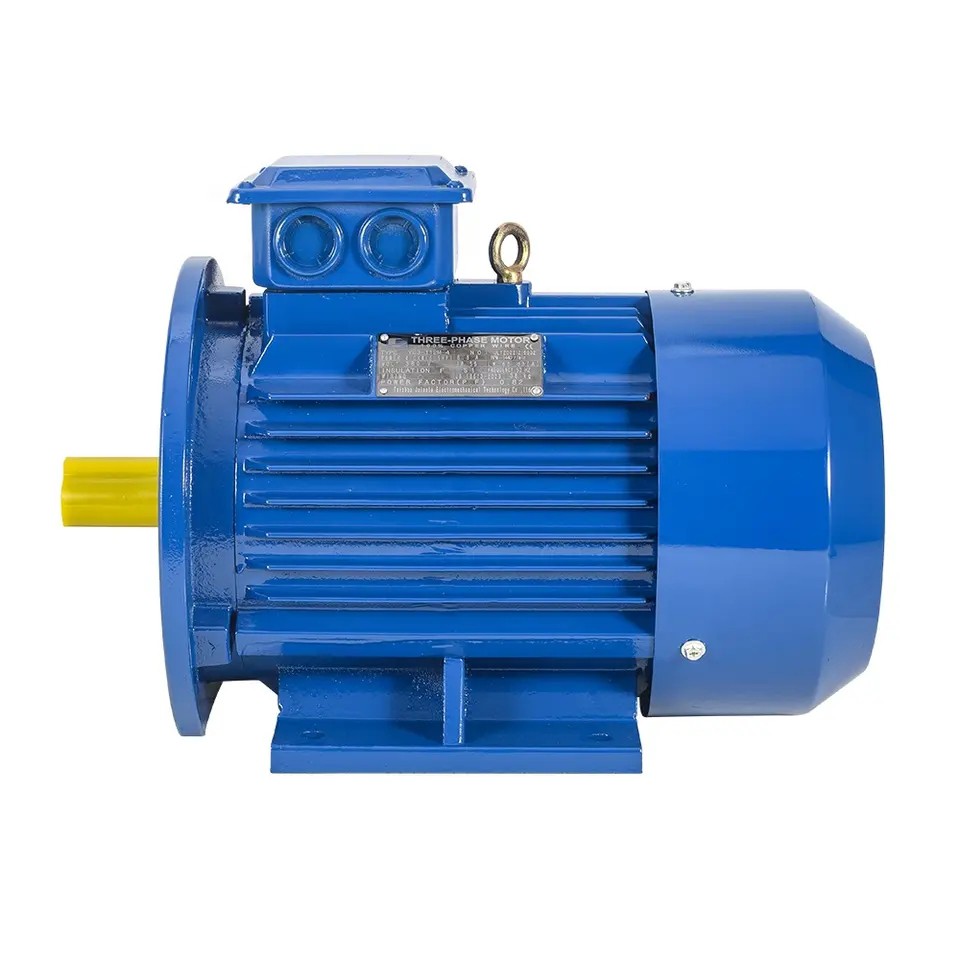
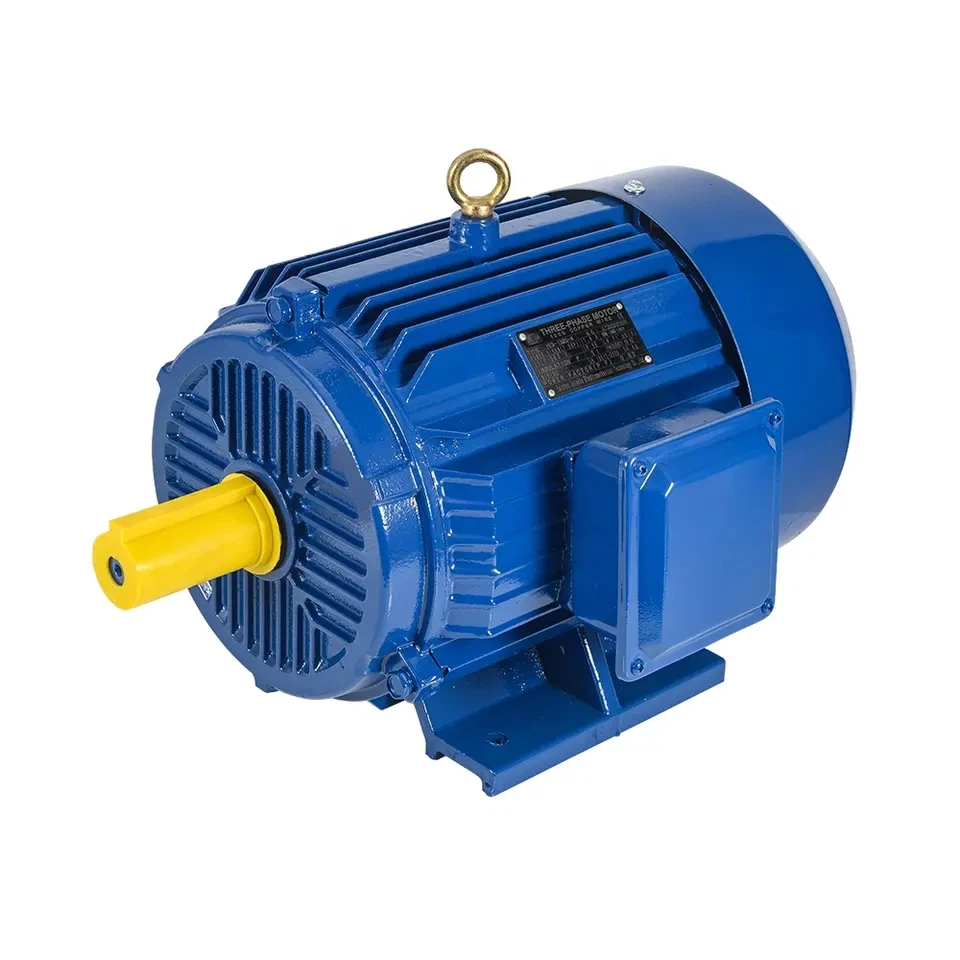
Three Phase Induction Motor
A three-phase induction motor is a type of AC induction motor that deals with a phase supply when diverged from the single-phase induction motor where the single-phase supply is supposed to work. The three-phase supply current makes an electromagnetic field in the stator winding which prompts the production of the torque in the rotor bending of the three-phase induction motor having a magnetic field.
Features
Taizhou Julante Electromechanical Technology Co.,Ltd. (Wenling Shengzhen Motor Plant which was founded in August, 1993) has constantly developed over years. Shanghai Cheng bang Electromechanical Co., Ltd. was founded after the registration in Shanghai in April 2004. Taizhou Aoxiang Electromechanical Co., Ltd. was founded after the registration in Taizhou in December 2005. Taizhou Julante Electromechanical Technology Co., Ltd. was founded in June 2011. At present, the company has 4 registered trademarks including Aoxiang, Chengbang, Shenzhe and Julante.In 2011, the company invested RMB20 million in building a standard three-storey plant which comes into service currently, with a building area of 10,000 square meters.
Why Choose US
Our Factory
Taizhou Julante Electromechanical Technology Co., Ltd. Which is located in Wenling,Taizhou City,Zhejiang Province,China , has constanly developed over 21years.At present,The company has 4 registered trademarks including Aoxiang, Wubang, Shenzhe and Julan.
Main Market
Thanks to its top quality and perfect after-sales service, the company has won trust of customers. Meanwhile, its products win favor of overseas customers. At present, its products are exported to more than 20 countries and areas such as the United States, Korea, Russia, Southeast Asia, Africa and Europe.
Our Product
Main Products Include high- and low-power Electric Motors such as "YY", "YC" and "YL" series Single Phase Motors and "YX3", "Y3" "Y2" "YD" "YT" &"MS "Three Phase Motors; Concrete Vibrators such as ZN series internal concrete vibrator,ZW series external concrete vibrators.Meanwhile, it can also produce welding machines, water pumps, air compressors, grinders, bench drills, cutting machines, axial flow fans, etc.
Professional team
The company has 50 managers at different posts, 30 R & D technicians, and 270 production employees. It realizes an annual productivity of 500,000 motors and 300,000 electric welding machines. Its sales network spreads all over provinces, municipalities and autonomous regions. Thanks to its top quality and perfect after-sales service, the company has won trust of customers.

Warranty:3months-1year
Place of Origin:Zhejiang, China
Brand Name:Julante
Model Number:ANP motor
Type:Induction Motor

Warranty:3months-1year
Place of Origin:Zhejiang, China
Brand Name:Julante
Model Number:ANP motor

Brand Name:Julante
Model Number:ANP motor
Type:Induction Motor
Frequency:50/60HZ

Phase Ac Asynchronous Electric Motor
Protect Feature:Totally Enclosed
AC Voltage:380V,660V,220v
Efficiency:IE 1
Certification:CCC CE
Duty:S1
Brand:Julante and OEM
Color:blue /yellow/red/customize
Altitude:not exceeding 1000m


AC Voltage:380V
Efficiency:IE 2
Cooling type:IC0141
Protection class:IP54/IP55
What is Three Phase Induction Motor
A three-phase induction motor is a type of AC induction motor that deals with a phase supply when diverged from the single-phase induction motor where the single-phase supply is supposed to work. The three-phase supply current makes an electromagnetic field in the stator winding which prompts the production of the torque in the rotor bending of the three-phase induction motor having a magnetic field.
Advantages of Three Phase Induction Motor
Induction motors are simple and rugged in construction. Advantage of induction motors are that they are robust and can operate in any environmental condition.
Induction motors are cheaper in cost due to the absence of brushes, commutators, and slip rings.
They are maintenance free motors unlike dc motors and synchronous motors due to the absence of brushes, commutators and slip rings.
Induction motors can be operated in polluted and explosive environments as they do not have brushes which can cause sparks.
3 phase induction motors will have self starting torque unlike synchronous motors, hence no starting methods are employed unlike synchronous motor. However, single-phase induction motors does not have self starting torque, and are made to rotate using some auxiliaries.
The stator winding is covered at 120˚ (electrically) to one another. When the stator winding is supplied with a three-phase power source, it results in the induction of a rotating magnetic field (rmf) within the stator circuit.
The speed of the rotating magnetic field is known as synchronous speed (ns).
As per faraday's law, emf induced in the guide because of the pace of progress of transition (dφ/dt). The rotor circuit cut the stator magnetic field and an emf actuated in the rotor bar or rotor winding.
The rotor circuit is a nearby way. Thus, because of this emf current will move through the rotor circuit.
Presently, we realize that the current-conveying guide actuates the attractive field. In this way, the rotor current prompts a second magnetic field. The general movement between the stator flux and rotor flux, the rotor begins to rotate to diminish the reason for relative movement. The rotor attempts to get the stator transition and starts rotating. The heading of revolution is given by the lenz's law. Furthermore, is toward the rotating magnetic field induced by the stator.
Here, the rotor current is created because of inductance. Hence, this motor is known as the induction motor.
The speed of the rotor is not exactly the speed of synchronous speed. The rotor attempts to get the alternating attractive field of the stator. Yet, it never gets it. Consequently, the rotor speed is slightly less than the synchronous speed. The synchronous speed is determined by the number of poles and the supply frequency. The difference between the rotor's actual speed and the synchronous speed is referred to as slip.
Construction of 3 Phase Induction Motor
The construction of an induction motor is exceptionally basic and robust. It has predominantly two sections :
Stator
Rotor
Stator of 3 Phase Induction Motor
As the name recommends, the stator is a fixed piece of the motor. The stator of the induction motor comprises of three primary parts;
Stator Casing
Stator Core
Stator Winding
Stator Casing
The stator outline is the external piece of the motor. The capability of the stator outline is to offer help to the stator core and stator winding. It gives mechanical strength to the inward pieces of the motor. The casing has balances on the external surface for heat dissemination and cooling of the motor.
The enclosure is cast for small machines and is produced for a large machine. Depending on the applications, the enclosure is constructed from die-cast or fabricated steel, aluminum/aluminum alloys, or stainless steel.
Stator Core
The stator core's function is to carry the alternating magnetic flux, leading to hysteresis and eddy current losses. To limit these losses, the core is coated with high-quality steel stampings with a thickness ranging from 0.3 to 0.6 mm.
These stampings are protected from one another by stain. All stampings stamp together looking like the stator center and fixed it with the stator outline.
An inward layer of the stator core has various number of slots.
Stator Winding
The stator winding is positioned within the available spaces inside the stator core. The stator winding consists of three phases, and a three-phase power supply is provided to it.
The motor's pole count is determined by the internal arrangement of the stator winding, and it Controls the motor's speed. When the number of poles is higher, the speed is lower, whereas if the number of poles is fewer, the speed is higher. The poles are generally two by two. Subsequently, the absolute number of poles generally a much number. The connection between simultaneous speed and number poles is as displayed in the below equation,
Ns = 120f / P
Where;
f = Supply Frequency
P = Total Number of Poles
Ns = Synchronous Speed
As the end of winding connected with the terminal box. Consequently, there are six terminals (two of each phase) in the terminal box.
As per the application and sort of turning over techniques for motors, the stator winding is associated in star or delta and it is finished by the association of terminals in the terminal box.
Rotor of 3 Phase Induction Motor
As the name proposes, the rotor is an rotating part of the motor. As indicated by the type of rotor, the induction motor is delegated;
Phase Wound (Wound Rotor) induction motor / Slip-ring induction motor
The development of the stator is same in the two kinds of induction motor. We will examine the kinds of rotors utilized in 3-phase induction motor in the accompanying part of types of three phase induction motor.
Applications of 3 Phase Induction Motor


Wastewater Treatment Plants: Pumps and other hardware in wastewater treatment plants frequently depend on 3-phase Induction motors for their operation. These motors can deal with the constant and variable loads related with wastewater treatment.
Oil and Gas Industry: Induction motors are utilized in different cycles inside the oil and gas industry, including driving siphons, blowers, and boring equipment.
Electric Traction: Various electric trains, cable cars, and electric vehicles utilize 3-phase induction motor for drive. These motors give a decent overall influence and effectiveness for transportation applications.
Air Conditioning and HVAC Systems: Induction motors power the fans and blowers in cooling and warming, ventilation, and cooling (air conditioning) system. Their effectiveness and capacity to deal with differing loads make them ideal for these applications.
Water Pumping Stations: Induction motors are generally utilized in water siphoning stations for providing water to urban communities and horticultural regions. Their dependability and capacity to work under changing burden conditions make them appropriate for water pumping applications.
Mining Operations: In mining, 3-phase Induction motors power rollers, transports, and other equipment. Their hearty plan and capacity to work in testing conditions make them appropriate for mining applications.
Manufacturing Plants: Induction motors are used in an extensive variety of assembling processes, including material taking care of, bundling, and sequential construction systems. Their unwavering quality and capacity to deal with weighty burdens add to their ubiquity in assembling.
Industrial Machinery: 3-phase induction motor are broadly utilized in modern apparatus like pumps, fans, blowers, transports, and machine devices. Their capacity to give high power yield and solid activity makes them reasonable for driving these types of equipment.
High-Efficiency Design Improvements and Advanced Materials
A high-efficiency motor design can improve the efficiency of three-phase AC electric motors. Premium and super-premium efficiency motors use high-quality materials and optimized designs to enhance performance and reduce energy losses.
To improve the design of a three-phase electric motor, the magnetic material can be changed to rare earth magnets to reduce magnetic losses, otherwise referred to as core losses. In three-phase motors, these core losses can result from cyclic magnetization and the demagnetization of the core material in a phenomenon known as hysteresis.
Other than using enhanced magnetic materials, other factors like improving the geometry of the stator and rotor and employing improved motor cooling systems can reduce losses due to heat and, in turn, increase the overall motor efficiency. Therefore, choosing a suitable motor-designed material is essential to minimize losses due to hysteresis, eddy currents, heat, and friction. This ensures the motor works optimally, reducing the overall energy consumption in industries.
Proper Sizing and Load Matching
Correct sizing of a three-phase AC motor is essential to ensure the motor runs efficiently with reduced energy wasted. Oversized motors expose their components to higher mechanical stress that leads to wear and tear, which reduces the motor's lifespan and causes frequent on/off cycles. Under-sized motors may also experience excessive wear and lower efficiency levels due to motors' inability to handle the required load. This leads to high energy consumed by the motor for the same work output, resulting in overheating.
Insight can be drawn to help select the right size motors and implement load-matching strategies by dynamically adjusting the motor's speed and torque. This helps to reduce the energy wasted by ensuring the motor operates at optimal efficiency. During motor sizing, it is essential to consider the power required to push RPM limits for a range of torque values in a given load requirement.
Comparing Single-Phase Vs Three-Phase Motors
Single phase motor operation
Inside a single-phase motor, the main drive coil is actually a series of coils distributed equally around the inside to smoothly drive the rotor inside. The voltage will be applied, leading to each coil alternating north and south at the main line frequency. The rotor will be magnetized to those poles, carrying it in a continuous circle.
This works while the motor is running at full speed, but there is a problem at start-up. The rotor will come to a halt at a random place when the motor is turned off, so the next time the voltage is applied at startup, it's hard to know whether an n-s magnetic attraction will cause it to go forward or backward to begin its rotation at startup. A random rotation direction is obviously unacceptable.
The most common method of correcting this problem is by using a capacitor in series with a secondary coil, usually called a 'starting coil'. Since the nature of a capacitor is to apply a burst of current at the very beginning of a voltage waveform, the current through this starting coil will occur a fraction of a second before the main coil. This causes the rotor to be attracted first to this start coil, then to the main drive coil in close succession, providing a predictable rotation direction.
The polarity of this start coil can be reversed to reverse the startup direction. Once the motor is sufficiently started, a very distinct "click" will indicate that a centrifugal switch has opened up the start coil, its job being finished. A bulge on the side of the housing usually contains the capacitor, so if that bulge is present, it is almost certainly a capacitor-start, single-phase motor.
3 phase motor operation
Many of the driving principles of the coils inside of a three-phase motor are exactly the same as the single phase. The only difference is that with three phases, the magnetic poles of the coil progress in increments of ⅓ of the way around the rotor as each line reaches full voltage. This means that depending on the sequence of coils being magnetized, the direction of rotation will no longer be random as it was in the single-phase motor - it's completely predictable and consistent. The starting circuit with the capacitor is no longer necessary since the motor drives quite naturally.
The main advantage of this kind of motor is in large-power applications. The supply and conductors are normally capable of providing larger amounts of current than residential systems in the first place, and each of the three lines will carry less current individually than if the entire current was traveling through one circuit. This makes the motor appealing in larger power applications. In the case of most three-phase motors, the wiring can be configured for either high or low voltage by the electrician. This can decrease the current consumption if a higher voltage supply is provided.
Three-phase vs single-phase motor applications
For most small shop applications that require motors with low power consumption, it would be normal to see a single-phase motor with a capacitor starting coil. For reference in terms of "power", a five horsepower motor run at 240 vac would consume about 15 amps.
Run at only 120 vac, this same 5 hp motor would consume 30 amps. This is quite a significant amount of current. For larger industrial applications, the natural solution would be a three-phase motor since the voltage and current supplies are much larger.
Safety Precautions of Induction Motor
Restorative maintenance
It is the most fundamental type of maintenance and repair. There are several drawbacks associated with restorative maintenance, some of which include a decreased amount of time for the machine's usable life and the loss of important energy. In certain circles, it is also referred to as corrective maintenance.
Preventive maintenance
The practise of doing preventive maintenance is known as protective maintenance.
It is the practise of doing routine inspections on the motor on a weekly, monthly and yearly basis in order to ensure that everything is in working order and to identify any problems at an earlier stage.
Some examples of preventative maintenance include tightening the belt, adjusting the tension of the belt, replacing the filters, and changing the oil.
It is important to not wait for anything to fail (or) break before looking into the issue, and this applies whether the motor in consideration is a dc motor or an ac motor.
Safety precautions include the following:
Visually inspect the motor, pulleys, belts, and machine to be powered for any hazards,
Listen for odd noises, such as tapping or humming,
Experience the motor housing to ensure it hasn't overheated, and
Visually check to ensure the motor isn't vibrating excessively.
Overload protection of induction motor
Overload occurs on induction motors by
Belts that are overly tight,
Improper lubrication,
Worn pulleys, and
Overloads that cause clogging are examples of improper installation.
Other examples include
Improper wiring and
Inadequate voltage.
Foreign objects being introduced into motor
Overload protection will ensure that the motor circuit has the appropriate fuses installed. Generally overload protection that is built into the motor control through a manual reset switch and starter for the motor that is unique (current-limiting starter).
Vibration levels kept to a minimum. Proper alignment to be checked since misalignment contributes to premature belt & bearing wear and it will serves an element in the overloading of the motor.
Protect against excessive oiling
An excessive amount of oil might result in an accumulation of more dust and the damage of the insulation inside the motor.
Dust accumulate prevention
Dust accumulation in and on a motor works as insulation & may cause excessive heating of the motor.
Moisture protection
Since moisture conducts electricity, a wet motor must be properly dried before operation.
Bearing maintenance
Rolling bearings greased are typically used in motors. Apart from close-type ball bearings, all other bearings are open type to minimise over-greasing by permitting grease injection and outflow.
Inspecting the bearings is more important. Bearing failures are often the consequence of improper lubrication, machine load, or faulty installation. Cleaning the grease from the ball (or) bearings, as well as removing and replacing the grease ball or roller bearings, are critical maintenance.
These do not include regular procedures to do on a weekly basis, but they are necessary every six months. In addition to examining the bearings, one should:
Clean the motor thoroughly.
Brushes that are over fifty percent worn should be replaced.
Brush holders should be cleaned.
Check and tighten connections.
FAQ
Hot Tags: three phase induction motor, China three phase induction motor manufacturers, suppliers, factory
No Information
You Might Also Like


Send Inquiry
